
Richmond Cleaning Tips: How to Clean Your Microwave Oven With Lemon
A microwave is one of those appliances that can go from clean to covered in food splatters surprisingly quickly. Sauces bubble over, leftovers pop while reheating, and small spills get cooked onto the walls every time the appliance is used again.
If you would rather avoid aggressive scrubbing, learning how to clean a microwave oven with lemon is a simple option. Lemon and water can create steam inside the microwave, helping soften dried food and grease so it is easier to wipe away. The lemon also leaves behind a fresh citrus scent.
At ProClean, we know that keeping kitchen appliances clean is much easier when you deal with buildup before it becomes severe. Here is a simple way to clean your microwave using lemon and a few basic supplies.
Why Does Lemon Work for Cleaning a Microwave?
The most important part of this method is actually the steam.
When water is heated inside the microwave, moisture collects on the interior surfaces and begins softening dried food and grease. Adding lemon gives the mixture a fresh scent and can help with some of the residue and food odours inside the appliance.
This means you can let moisture do much of the work before you start wiping.
Instead of immediately scrubbing dried sauce with a rough sponge, you soften the buildup first. Once it has absorbed some moisture, it should be much easier to remove with a microfiber cloth or soft sponge.
For routine microwave maintenance, this simple approach is often enough.
What You Need
You only need a few supplies:
- One fresh lemon or lemon juice
- Water
- A microwave safe bowl
- A microfiber cloth
- A soft, nonabrasive sponge
- Mild dish soap
- A clean towel
Before trying any cleaning method, check the care instructions for your specific microwave. Different interior and exterior finishes may have different cleaning recommendations.
How to Clean a Microwave Oven With Lemon Step by Step
Step 1: Remove the Turntable
Start by taking the glass turntable out of the microwave.
Remove any loose crumbs or pieces of food from the bottom of the appliance. If your microwave has a removable roller ring underneath the turntable, you can remove that as well.
Clearing away loose debris first prevents you from spreading crumbs around once the interior becomes damp.
Step 2: Prepare the Lemon Water
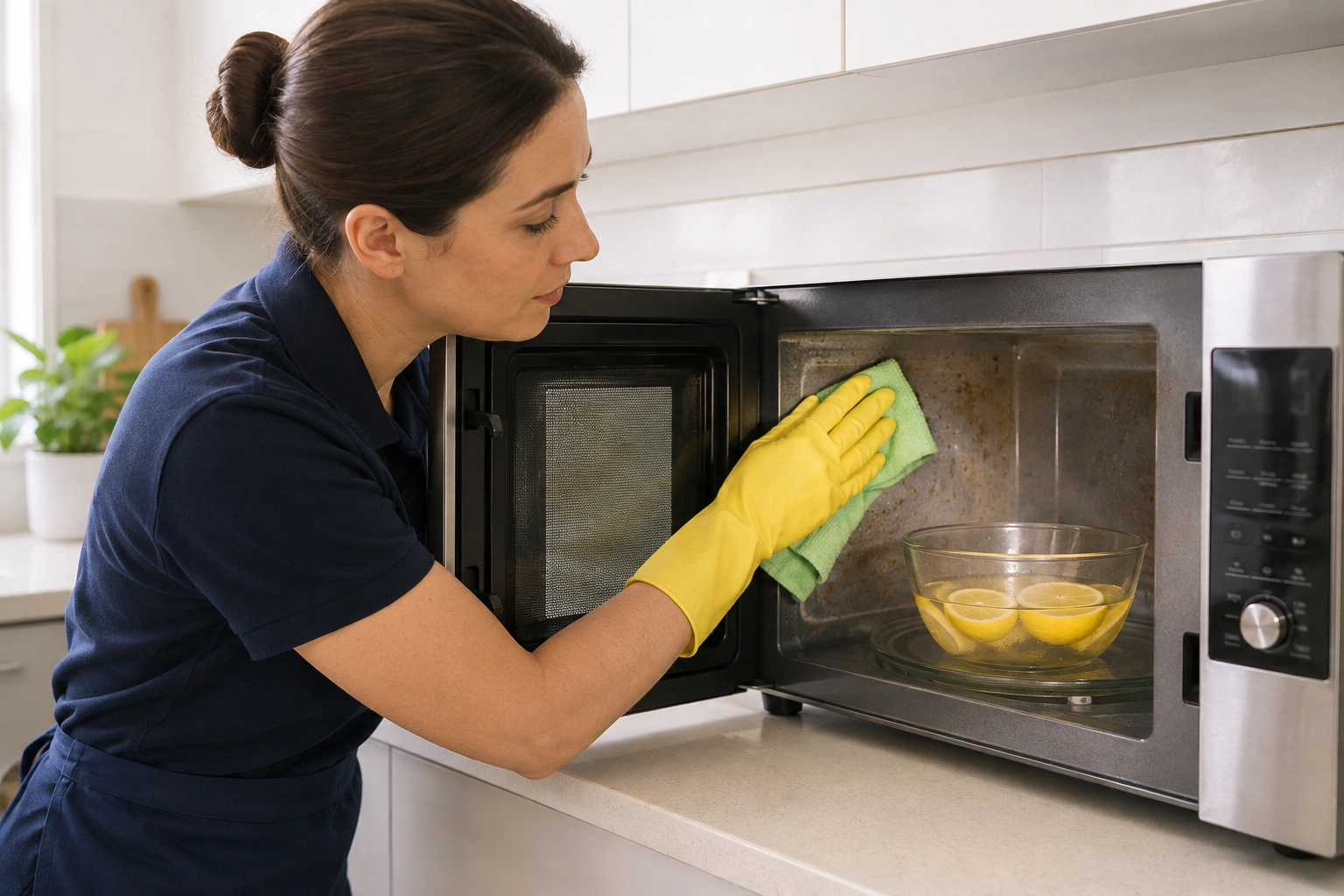
Fill a microwave safe bowl with water and add several slices of fresh lemon.
You can squeeze some of the lemon juice into the water before dropping the slices into the bowl. If you do not have a fresh lemon available, a modest amount of lemon juice can also be used.
You do not need an overly concentrated mixture. The main goal is to create steam.
Make sure there is enough room in the bowl to reduce the risk of liquid spilling or boiling over.
Step 3: Heat the Lemon Water
Place the bowl inside the microwave and heat it according to the recommendations for your appliance.
You want the water to become hot enough to produce plenty of steam throughout the microwave.
Do not leave the appliance unattended while heating the mixture.
Once enough steam has developed, turn the microwave off but leave the door closed for a short period. This gives the moisture additional time to soften dried food on the ceiling, walls, door, and base.
Step 4: Remove the Bowl Carefully
Be careful when opening the microwave.
The bowl, water, and steam can all be extremely hot. Allow the mixture to cool enough to handle safely and use suitable protection when removing the bowl.
Avoid placing your face directly over the hot bowl or steam.
Once the bowl is safely out of the way, you can begin wiping the interior.
Step 5: Wipe From Top to Bottom
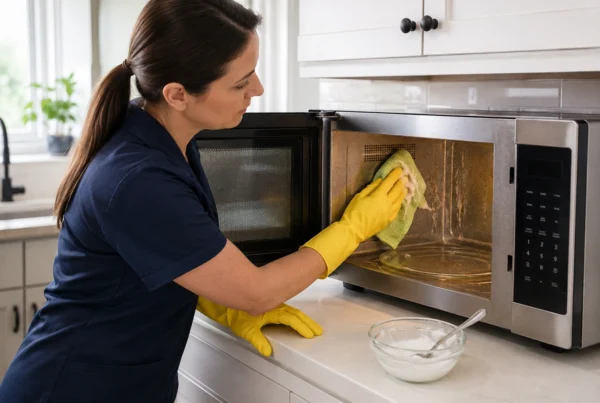
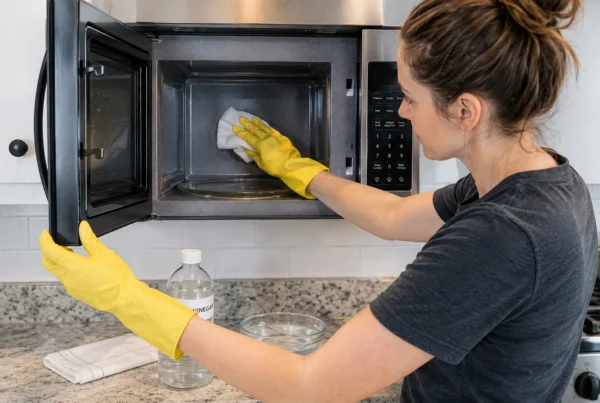
Use a clean microfiber cloth to wipe the inside of the microwave.
Start with the ceiling because food often splatters upward during heating. Then move to the back and side walls, followed by the door and bottom surface.
Working from top to bottom prevents loosened food from falling onto surfaces you have already cleaned.
For light and moderate buildup, much of the residue should wipe away once the steam has had time to soften it.
How Do You Remove Stubborn Microwave Grease With Lemon?
If your microwave has not been cleaned in a while, one round of steam cleaning may not remove everything.
That does not mean you need to start scrubbing aggressively.
Repeat the steaming process and give the stubborn residue more time to soften. Dried sauces and grease that have been heated repeatedly can take longer to break down.
Once the area is damp and softened, use a microfiber cloth or nonabrasive sponge to work on the remaining residue.
A small amount of mild dish soap may also help with greasy areas if it is appropriate for your microwave’s interior.
The important thing is to avoid reaching immediately for steel wool, harsh scouring pads, or other abrasive materials that could damage the surface.
How to Clean the Microwave Turntable
While the lemon water is doing its job, you can clean the turntable separately.
Wash the glass plate with warm water and mild dish soap. Pay particular attention to dried food around the edges and underneath the turntable, where spills can be easy to overlook.
Clean the roller ring as well if your microwave has one and the manufacturer allows it to be removed.
Rinse everything thoroughly and allow the pieces to dry before placing them back inside.
If the turntable has recently been heated, allow it to cool before washing it. Sudden changes in temperature are best avoided with hot glass.
How to Clean the Microwave Door
The inside of the door can collect grease, fingerprints, condensation, and food residue.
Wipe the glass and surrounding surfaces gently with a microfiber cloth.
If there are stubborn food marks, use some of the lemon water on your cloth rather than pouring or spraying liquid directly across the door.
Pay attention to the door seal and edges, but avoid saturating them with water.
Once the inside is clean, wipe the exterior using a cleaning method appropriate for the appliance’s finish.
Be Careful When Cleaning the Exterior
Your microwave’s exterior may require a different approach from the interior.
For many surfaces, a damp microfiber cloth and a small amount of mild dish soap can be enough for ordinary fingerprints and grease.
Avoid spraying liquid directly into:
- Vents
- Buttons
- Control panels
- Openings
- Electrical components
Apply the cleaner to your cloth when appropriate so you have more control over where the moisture goes.
If the microwave has a stainless steel or specialty exterior, check the manufacturer’s instructions before applying lemon juice or any other acidic cleaning ingredient.
Does Lemon Help Remove Microwave Odours?
Lemon can help freshen a microwave, especially when unpleasant smells are connected to food residue inside the appliance.
However, adding a pleasant citrus scent is not a replacement for actually removing the source of the smell.
Make sure you clean the ceiling, walls, door, bottom, turntable, and area underneath the turntable. A small amount of forgotten food can continue producing an unpleasant smell even if the rest of the microwave looks clean.
For persistent food odours, repeat the steam cleaning process and inspect areas that may have been missed the first time.
If the microwave produces an unusual electrical or burning smell that does not appear to come from food, stop using it and follow the appliance manufacturer’s guidance.
Can You Clean a Microwave With Lemon and Baking Soda?
Lemon and baking soda can both be useful for household cleaning, but you do not need to combine them into one mixture.
For most microwave cleaning, lemon water and steam are enough to loosen ordinary food and grease.
If a stubborn spot remains afterward, a small amount of baking soda mixed with water may be used separately if it is suitable for your appliance’s surface.
Apply it carefully to the affected area, wipe gently with a soft cloth or sponge, and remove the residue thoroughly afterward.
Keeping the process simple is usually better than mixing several cleaning ingredients together unnecessarily.
Common Mistakes When Cleaning a Microwave With Lemon
The lemon steam method is simple, but there are still a few things you should avoid.
Scrubbing before steaming: Dry, hardened food is much harder to remove. Let the steam soften it first.
Using abrasive tools: Steel wool and rough scouring pads may damage microwave surfaces. Start with a microfiber cloth or soft sponge.
Overheating the lemon water: You only need enough heat to generate steam. More heat does not automatically produce better cleaning.
Handling the bowl too quickly: The water and container can become extremely hot, so be cautious when removing them.
Spraying liquid into openings: Keep moisture away from vents, controls, and electrical components.
Forgetting the ceiling: Food splatter does not only land on the bottom and side walls. Always check above the turntable too.
Ignoring underneath the turntable: Crumbs and spills can collect below the plate and contribute to lingering smells.
How Often Should You Clean Your Microwave?
How often you need to clean your microwave depends on how frequently you use it and how messy the food being heated tends to be.
A quick wipe after noticeable spills can prevent most serious buildup. Just wait until the microwave is safe to clean before touching hot surfaces.
If your household uses the microwave frequently, a light weekly wipe can help keep grease and food residue under control.
A deeper cleaning is worthwhile whenever you notice dried food, noticeable grease, persistent food smells, or buildup underneath the turntable.
The longer food remains on the microwave walls, the more heating cycles it goes through and the more annoying it can become to remove.
How to Keep Your Microwave Cleaner for Longer
Prevention makes microwave cleaning much easier.
Use an appropriate microwave safe cover when heating foods that tend to splatter. This can dramatically reduce the amount of sauce and grease that reaches the interior walls.
Avoid filling containers too high, especially with foods such as soup or sauces that may bubble over.
If something spills, wipe it once the appliance has cooled instead of leaving it until the next deep clean.
You should also remove and clean the turntable regularly. It only takes a few minutes when spills are fresh.
Small habits like these mean you are less likely to face layers of dried food later.
When Is Professional Cleaning Worth Considering?
Cleaning one microwave usually does not require professional help.
The situation is different when the microwave is only one part of a kitchen that needs significant attention.
You may also have grease around the stovetop, a dirty oven, food residue inside the refrigerator, cabinets that need cleaning, and floors that require a deeper clean.
In that situation, getting professional help can save you from spending an entire day working through appliances and surfaces one at a time.
ProClean’s special cleaning services specifically include deep appliance cleaning for microwaves, ovens, and refrigerators, with the service customized around the particular cleaning project.
For customers who need a more complete home refresh, ProClean also provides customizable house cleaning that can cover kitchens and other rooms throughout the home.
Keep Your Microwave Fresh With a Simple Lemon Clean
Learning how to clean a microwave oven with lemon gives you a simple way to deal with everyday food splatters, grease, and lingering food smells.
Add lemon to water in a microwave safe bowl, heat it carefully to create steam, and give the moisture time to soften the buildup before wiping the interior with a microfiber cloth.
Remember to clean the ceiling, door, turntable, and area underneath the plate instead of focusing only on the most obvious stains.
Most importantly, clean spills before they have the chance to become layers of stubborn residue. A few minutes of regular maintenance can make the next deep clean much easier.
If your microwave is only the beginning of your cleaning list, contact ProClean to request a quote and find the right cleaning service for your home.
Follow us on our socials here:
Find out more articles that can help you below:
- What Is the Effect of Oven Cleaner on Kitchen Countertops
- How to Clean a Microwave Oven With Vinegar
- How to Clean the Oven Glass
- How to Clean a Microwave Oven With Baking Soda