
Richmond Homeowners’ Guide to Cleaning a Microwave Oven With Baking Soda
Food splatters inside a microwave can go from easy to clean to surprisingly stubborn after they have been reheated a few times. Sauces dry onto the walls, grease collects around the door, and forgotten spills underneath the turntable can eventually create unpleasant smells.
If you are wondering how to clean a microwave oven with baking soda, you can use a simple combination of baking soda, water, steam, and gentle wiping to deal with much of this everyday buildup.
Baking soda is especially useful when you want a mild cleaning option that can help with food residue and lingering odours. The most important part of the process, however, is giving moisture enough time to soften dried food before you start scrubbing.
Here is a simple way to do it.
Why Use Baking Soda to Clean a Microwave?
Baking soda is commonly used for household cleaning because it can help loosen certain types of grime and control some food odours.
When you combine it with water and create steam inside the microwave, the moisture helps soften dried food on the walls, ceiling, door, and bottom of the appliance.
That means you can often wipe away residue instead of aggressively scrubbing it.
Baking soda can also be made into a gentle paste for stubborn spots that remain after steam cleaning. Because it can still be mildly abrasive, it should be used carefully rather than rubbed forcefully against the microwave’s surfaces.
Always check the cleaning instructions for your specific appliance before applying any cleaning product.
What You Need
You only need a few basic supplies:
- Baking soda
- Water
- A microwave safe bowl
- A microfiber cloth
- A soft, nonabrasive sponge
- Mild dish soap
- A clean towel
There is no need to use a large amount of baking soda. More product does not necessarily mean better results.
How to Clean a Microwave Oven With Baking Soda Step by Step
Step 1: Remove the Turntable
Take the turntable out and remove any loose crumbs or food particles from the microwave.
If your appliance has a removable roller ring underneath the glass plate, take that out as well.
Starting with a clear interior makes it easier to focus on grease and dried food once the steam begins loosening it.
Step 2: Prepare the Baking Soda and Water
Add water and a small amount of baking soda to a microwave safe bowl.
Stir the mixture and make sure the bowl has enough empty space so the liquid is less likely to spill while heating.
The purpose of this mixture is primarily to create steam inside the appliance while incorporating baking soda into the cleaning process.
Step 3: Heat the Mixture
Place the bowl inside the microwave and heat it according to your appliance manufacturer’s safety recommendations.
You want enough heat to generate steam throughout the microwave.
Do not leave the appliance unattended while heating the mixture, and avoid unnecessarily overheating the liquid.
Once steam has developed, turn the microwave off and leave the door closed briefly. This gives the moisture more time to soften dried food.
Step 4: Remove the Bowl Carefully
The bowl, water, and steam can become extremely hot.
Allow them to cool enough to handle safely and use appropriate protection when removing the container.
Once the bowl is safely out of the way, you can start cleaning the interior.
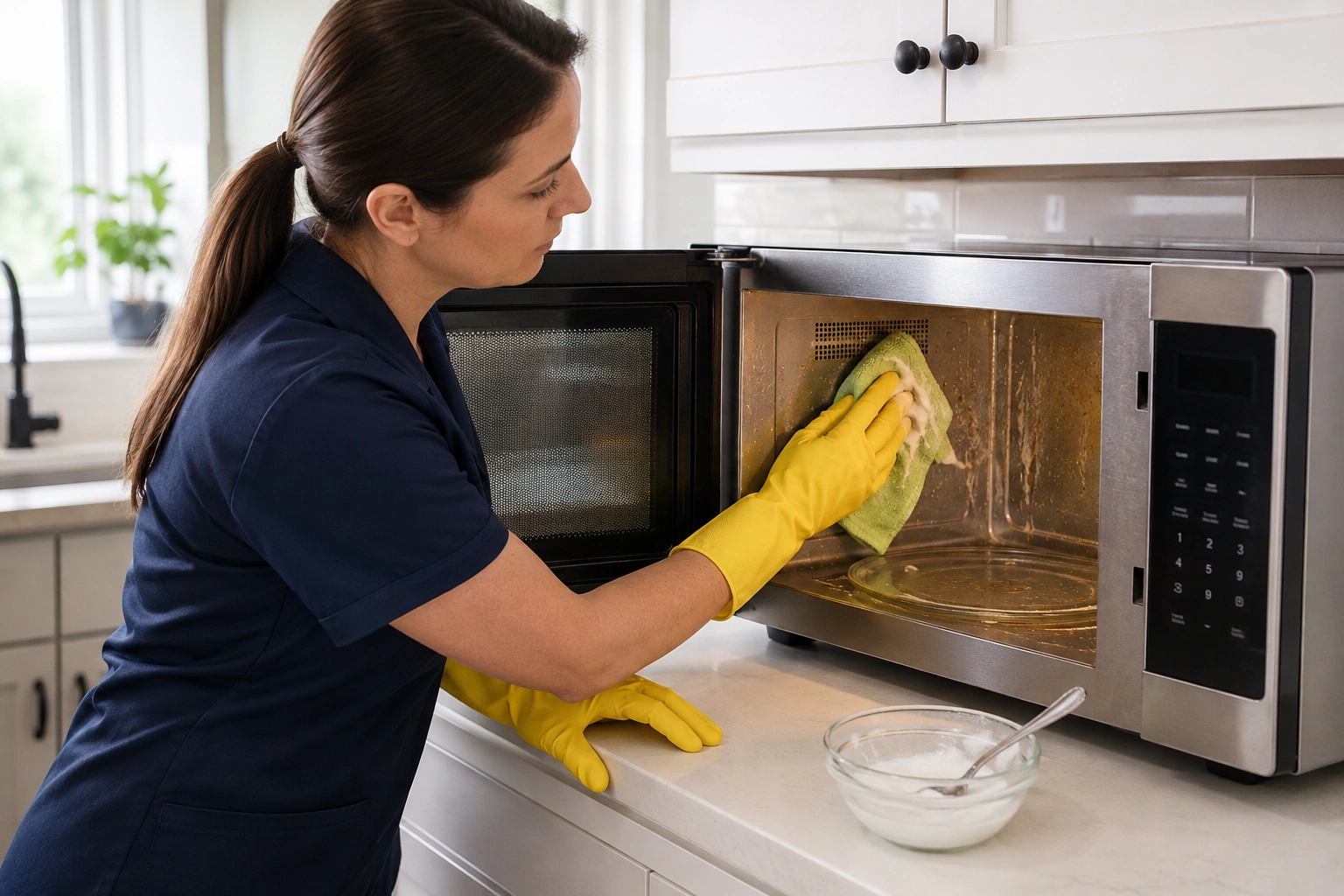
Step 5: Wipe From Top to Bottom
Use a microfiber cloth to wipe away the softened food and grease.
Start with the microwave ceiling, which is easy to overlook even though food frequently splatters upward. Continue with the side walls, back wall, door, and finally the bottom.
Working from top to bottom prevents loosened debris from falling onto areas you have already cleaned.
For ordinary food buildup, steam should make much of the residue easier to wipe away.
How to Remove Stubborn Food With Baking Soda
Some spots may remain after the initial steam cleaning.
Instead of immediately reaching for a rough scrubber, try a small amount of baking soda mixed with enough water to create a soft paste.
Apply it gently to the affected area if baking soda is appropriate for your microwave’s surface. Allow it to sit briefly before wiping with a damp microfiber cloth or soft sponge.
Use gentle pressure.
Baking soda is mildly abrasive, so aggressively rubbing dry powder across a surface is not a good idea. The goal is to loosen the stain rather than scour it away.
If the food still refuses to move, another round of steam may be more effective than scrubbing harder.
How to Clean the Microwave Turntable
The removable turntable is usually straightforward to clean.
Wash it with warm water and mild dish soap, paying attention to dried food around the edges and underneath the plate.
For particularly stubborn residue, a gentle baking soda paste may be useful if it is appropriate for the glass surface.
Clean the roller ring underneath the turntable as well. Crumbs and spilled food can collect there and contribute to unpleasant smells.
Rinse and dry everything thoroughly before returning the components to the microwave.
If the turntable is hot, allow it to cool before washing it to avoid exposing hot glass to a sudden temperature change.
Can Baking Soda Remove Microwave Odours?
Baking soda can help with some lingering food odours, but cleaning the source of the smell is more important than simply trying to cover it.
If your microwave smells like burnt popcorn, fish, curry, tomato sauce, or another strongly scented food, inspect the entire interior.
Check the:
- Ceiling
- Side walls
- Door
- Bottom
- Turntable
- Roller ring
- Area underneath the turntable
Food residue hiding underneath the plate can continue producing smells even if the visible surfaces look clean.
Once the source has been removed, baking soda can help with remaining food odours.
An unusual electrical or burning smell is different. If the smell does not appear to be coming from food or grease, stop using the microwave and follow the manufacturer’s guidance.
How to Clean the Microwave Door and Exterior
The microwave door can collect fingerprints, food splatters, grease, and condensation.
Use a microfiber cloth and an appropriate mild cleaning solution to wipe the glass and surrounding areas.
Avoid spraying liquid directly into vents, buttons, control panels, seals, or other openings.
When possible, apply the cleaning solution to your cloth instead. This gives you more control over where the moisture goes.
The exterior may also require a different cleaning approach from the interior. Stainless steel and specialty finishes can have their own care requirements, so check the appliance instructions before applying baking soda to them.
Can You Mix Baking Soda and Vinegar?
Baking soda and vinegar are often mentioned together in DIY cleaning advice, but you do not need to combine them to clean your microwave.
They react when mixed, which can make the fizzing look like something powerful is happening. In practice, using each ingredient appropriately on its own can be more useful.
For this method, baking soda and water are enough.
If you prefer vinegar, that can be used as a separate microwave steam-cleaning method rather than mixing everything together.
Keeping the process simple also makes it easier to control what you are applying to the appliance.
Common Mistakes to Avoid
A few mistakes can make microwave cleaning harder than it needs to be.
Scrubbing too aggressively: Let steam soften the food before applying more pressure.
Using too much baking soda: You only need a modest amount.
Using rough scouring pads: Steel wool and abrasive scrubbers may damage microwave surfaces.
Overheating the water: You need steam, not an aggressively boiling container.
Handling the bowl too quickly: Heated water and steam can cause burns, so use caution.
Spraying liquid into controls: Apply cleaning products to a cloth instead of spraying them into openings.
Forgetting underneath the turntable: Spills and crumbs frequently collect there.
How Often Should You Clean Your Microwave?
You do not need to deep clean your microwave constantly.
Instead, try to wipe visible spills after the appliance has cooled and is safe to clean. Fresh food is much easier to remove than something that has been reheated repeatedly.
If you use your microwave frequently, a quick weekly check can help prevent buildup.
A more thorough cleaning is worthwhile when you notice dried food, grease, lingering food odours, or residue around the turntable and door.
Regular maintenance keeps the job small.
How to Keep Your Microwave Cleaner
A few simple habits can reduce how often you need baking soda or another deeper cleaning method.
Cover food with an appropriate microwave safe cover when reheating meals that are likely to splatter.
Avoid filling containers too high, especially with sauces, soups, and other foods that may bubble over.
If something spills, clean it once the microwave is safe to handle instead of letting it dry.
You should also remove and wash the turntable regularly rather than waiting until food has accumulated underneath it.
These small habits can prevent a five-minute cleanup from eventually becoming a much bigger job.
When Professional Cleaning Can Help
Cleaning a microwave by itself is usually an easy DIY task. Professional cleaning becomes more useful when the microwave is only one part of a much larger cleaning project.
If your oven, refrigerator, cabinets, floors, bathrooms, and other areas also need attention, spending your entire day working through them individually may not be how you want to use your time.
ProClean offers customizable residential cleaning along with special cleaning requests for more detailed jobs. Their current special-request service includes deeper appliance cleaning, including ovens and refrigerators, while their broader house-cleaning service covers kitchens and other rooms throughout the home.
Keep Microwave Cleaning Simple
Learning how to clean a microwave oven with baking soda does not need to be complicated.
Start by removing the turntable and loose food. Use baking soda and water with steam to soften dried residue, then wipe the interior gently with a microfiber cloth.
For stubborn spots, use a small amount of baking soda paste where appropriate rather than immediately turning to aggressive scrubbing. Clean the turntable and area underneath it, wipe the door, and dry everything before putting the appliance back together.
Most importantly, deal with spills before they become heavily baked onto the surface.
A few minutes of regular cleaning can save you considerably more effort later.
If your microwave is only one part of a longer household cleaning list, ProClean can help with the bigger job so you can spend less time working through every room and appliance yourself.
Follow us on our socials here:
Find out more articles that can help you below:
- What Is the Effect of Oven Cleaner on Kitchen Countertops
- How to Clean a Microwave Oven With Vinegar
- How to Clean Microwave Oven With Lemon
- How to Clean the Oven Glass