
How to Clean a Microwave Oven With Vinegar in Just Minutes
Opening your microwave and finding dried sauce, grease, and food splatters covering the inside is never particularly pleasant. The good news is that you usually do not need aggressive scrubbing or a collection of strong cleaning products to deal with it.
If you are wondering how to clean a microwave oven with vinegar, one of the easiest methods is to combine white vinegar with water and use the steam to soften dried food before wiping it away.
This approach is inexpensive, straightforward, and particularly useful for regular kitchen maintenance. At ProClean, we know that appliances such as microwaves are easy to overlook during everyday cleaning. A few minutes of maintenance can prevent small splatters from becoming stubborn buildup later.
Here is how to do it properly.
Why Use Vinegar to Clean a Microwave?
White vinegar contains acetic acid, which can help loosen grease and food residue. When diluted vinegar and water are heated inside the microwave, they also create steam.
The steam is particularly useful because dried food becomes much easier to remove once moisture has had time to soften it.
Instead of immediately attacking hardened food with a rough sponge, you can let the steam loosen much of the mess first. This usually means less scrubbing and makes it easier to clean areas such as the microwave ceiling and back wall.
ProClean also recommends diluted vinegar for several kitchen surfaces in our guide to making kitchen cleaner with vinegar, including microwave interiors.
It is important to remember that vinegar is primarily being used here as a cleaning ingredient. It should not automatically be treated as a replacement for a disinfectant when disinfection is specifically required.
What You Need
You only need a few basic supplies:
- White vinegar
- Water
- A microwave safe bowl
- Microfiber cloth
- Soft, nonabrasive sponge
- Clean towel
- Mild dish soap for the turntable
Before starting, check your microwave manufacturer’s cleaning instructions, particularly if the appliance has specialty interior surfaces or finishes.
How to Clean a Microwave Oven With Vinegar Step by Step
Step 1: Remove Loose Food
Take out the microwave turntable and remove any loose crumbs or pieces of food from the bottom.
If there is a roller ring underneath the turntable, remove that as well if your appliance allows it.
Getting rid of loose debris first prevents you from spreading it around once the interior becomes wet.
Step 2: Prepare the Vinegar Solution
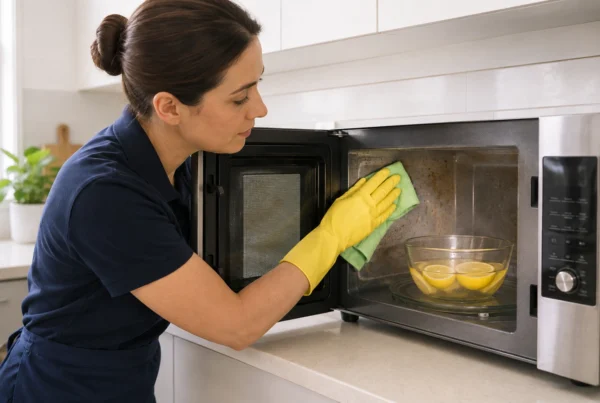
Add white vinegar and water to a microwave safe bowl.
A diluted mixture is enough. You do not need to fill the bowl or use undiluted vinegar.
Make sure the container is microwave safe and has enough empty space that the liquid will not easily spill or boil over.
Step 3: Heat the Vinegar and Water
Place the bowl in the microwave and heat it long enough to create steam, following the safety and heating recommendations for your particular appliance.
The goal is not to boil the mixture aggressively. You simply want enough steam to collect throughout the interior and soften the dried food.
Do not leave the microwave unattended while heating liquid.
Step 4: Let the Steam Work
Once enough steam has developed, stop the microwave and leave the door closed briefly.
This gives the warm moisture more time to soften food and grease on the walls, ceiling, and door.
This waiting period can make the biggest difference when dealing with dried splatters.
Step 5: Carefully Remove the Bowl
The bowl and liquid may be very hot.
Use appropriate protection when removing it and avoid placing your face directly over the bowl or hot steam.
Set it somewhere safe before you start wiping the microwave.
Step 6: Wipe From Top to Bottom
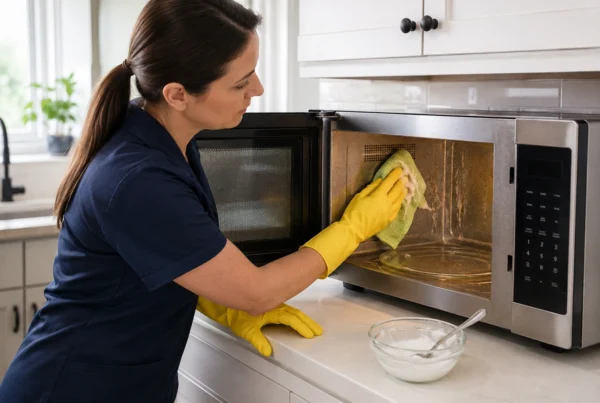
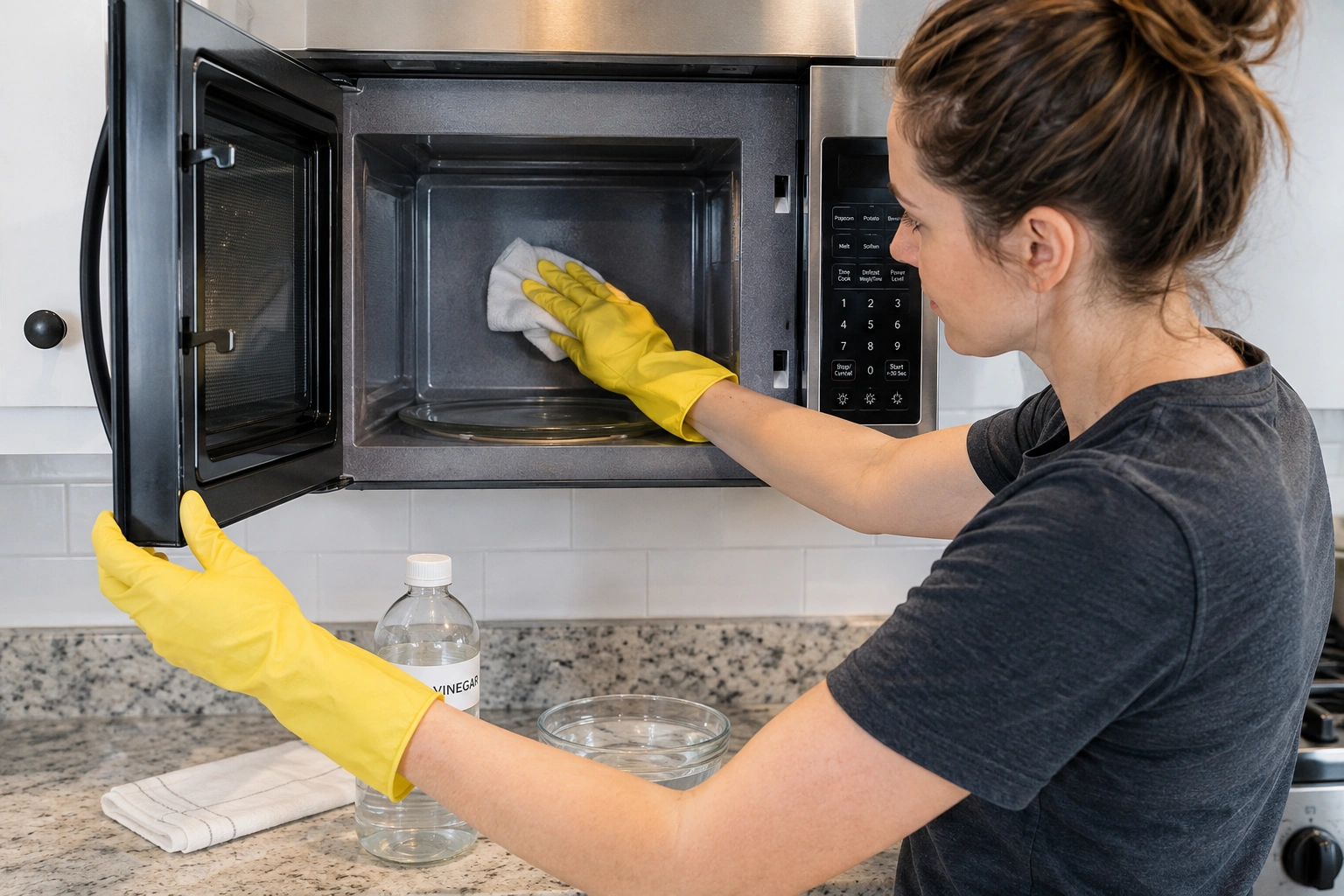
Use a clean microfiber cloth to wipe the interior.
Start with the ceiling, then work down the side walls and back before cleaning the bottom.
Cleaning in this order prevents loosened food from falling onto areas you have already finished.
For most everyday buildup, the softened food should wipe away fairly easily.
Step 7: Clean the Door
Wipe the inside of the microwave door, paying attention to grease and food residue around the edges.
Be careful around openings, seals, and vents. Avoid saturating these areas with liquid.
Step 8: Dry the Interior
Once the residue is gone, wipe the interior with a clean damp cloth if necessary to remove remaining vinegar or food residue.
Finish with a dry cloth before replacing the turntable.
How to Remove Stubborn Microwave Grease
Sometimes one round of steaming will not be enough.
If your microwave has not been cleaned in a while, repeated heating may have created a thicker layer of grease and dried food.
Instead of immediately reaching for an abrasive scrubber, repeat the steam process.
Letting the residue soften again is usually better than applying excessive pressure to the microwave’s interior.
For a stubborn spot, a soft nonabrasive sponge can provide a little more cleaning power. You may also use mild dish soap where appropriate.
The important thing is to avoid damaging the interior finish while trying to remove a stain.
How to Clean the Microwave Turntable
The turntable is usually one of the easiest parts to clean because it can be removed completely.
Once the glass has cooled, wash it with warm water and dish soap. Pay attention to food residue around the edges and underneath the plate.
Rinse it thoroughly and dry it before returning it to the microwave.
Do not forget the roller ring underneath if your appliance has one. Crumbs and food particles can accumulate around it and sometimes interfere with smooth movement.
If the glass turntable is hot, allow it to cool before washing it. Moving hot glass directly into cooler water can expose it to sudden temperature changes.
How to Clean the Microwave Door and Exterior
The outside of the microwave also collects fingerprints, grease, and cooking residue.
Use a damp microfiber cloth and mild cleaning solution appropriate for the appliance surface.
Rather than spraying cleaner directly across the microwave, apply it to your cloth first when appropriate. This gives you more control and helps prevent liquid from entering buttons, vents, control panels, or other openings.
If your microwave has a stainless steel exterior, follow the manufacturer’s care recommendations. Some cleaning ingredients that work well inside a microwave may not be appropriate for every exterior finish.
Wipe in a consistent direction and finish with a clean dry cloth to reduce streaking.
Can You Use Vinegar and Baking Soda Together?
Vinegar and baking soda are both common household cleaning ingredients, but combining large amounts of them is not necessarily the most effective way to clean your microwave.
When mixed together, they react and begin neutralizing each other.
For routine microwave cleaning, vinegar and water are usually enough to create the steam needed to soften food.
If one stubborn area remains after steaming, baking soda can potentially be used separately. A small amount mixed with water can create a gentle paste, provided the microwave manufacturer indicates that it is appropriate for the surface.
Apply it carefully to the problem area, wipe gently, and remove the residue thoroughly afterward.
There is usually no need to turn microwave cleaning into a science experiment.
Does Vinegar Help Remove Microwave Odours?
It can help with some food odours, particularly when the smell is being caused by residue left inside the appliance.
However, simply heating vinegar without actually cleaning the microwave will not solve every odour problem.
Wipe the walls, ceiling, door, bottom, and turntable thoroughly after steaming. Check underneath the turntable and around the edges for hidden food residue as well.
If the smell remains, repeat the cleaning process and make sure no food has become trapped somewhere inside the accessible interior.
Persistent burning or electrical smells are different. If your microwave produces an unusual smell that does not appear to be related to food, stop using it and consult the manufacturer or an appliance professional.
Common Microwave Cleaning Mistakes
Cleaning a microwave is fairly simple, but a few common mistakes can make the job harder.
Scrubbing Before Softening the Food
Dried food is much harder to remove when it is completely dry. Give steam time to loosen the residue before scrubbing.
Using Steel Wool or Rough Pads
Aggressive scouring pads can damage some microwave surfaces. A microfiber cloth or soft sponge is usually a safer starting point.
Using Too Much Vinegar
More is not automatically better. Diluted vinegar is enough for this method because much of the cleaning benefit comes from the steam.
Overheating the Solution
The goal is to create steam safely, not boil the mixture as aggressively as possible. Follow your appliance’s instructions and handle heated liquid carefully.
Spraying Cleaner Into Openings
Avoid spraying liquids directly into vents, controls, or other openings. Apply cleaner to your cloth when appropriate instead.
Forgetting the Ceiling
Food splatters upward too. The ceiling is often one of the dirtiest areas inside a frequently used microwave.
How Often Should You Clean Your Microwave?
There is no fixed schedule that works for every household.
If you use your microwave every day, a quick wipe once a week can help prevent grease and food from building up. Fresh splatters should ideally be wiped once the appliance is cool and safe to clean.
A deeper cleaning is worthwhile whenever you notice dried food, grease, unpleasant smells, or buildup around the door and turntable.
Cleaning small messes regularly is much easier than waiting until months of food residue have accumulated.
How to Keep Your Microwave Cleaner
A few habits can reduce how often you need to deep clean it.
Cover food with an appropriate microwave safe cover when heating foods that are likely to splatter. Avoid overfilling containers, particularly when heating soups, sauces, or other foods that can bubble over.
If something spills, clean it once the microwave is safe to handle instead of repeatedly reheating the stain.
Also clean the turntable regularly. It collects more spills than you might realize, especially underneath the plate.
These small habits can turn microwave cleaning into a quick wipe rather than a major kitchen project.
When Should You Consider Professional Cleaning?
A microwave usually does not require professional cleaning by itself.
However, it may be one of several appliances that need attention during a larger kitchen or home deep clean.
If you are dealing with heavy grease, an oven that needs cleaning, a dirty refrigerator, or several neglected kitchen areas at once, professional help can save a considerable amount of time.
ProClean offers special cleaning requests that include deep appliance cleaning for microwaves, refrigerators, and ovens.
For customers who need more than appliance cleaning, ProClean also provides customizable house cleaning services for kitchens and other areas throughout the home.
Make Microwave Cleaning Easier With Vinegar
Learning how to clean a microwave oven with vinegar can make a messy appliance much easier to deal with.
Instead of immediately scrubbing dried food, use diluted white vinegar and water to create steam. Give that moisture time to soften the residue, then wipe the microwave from top to bottom with a microfiber cloth or soft sponge.
Clean the turntable separately, pay attention to the inside of the door, and avoid abrasive materials that could damage the surface.
Most importantly, do not wait until the inside is covered in dried food before cleaning it. Wiping fresh splatters and giving the microwave a quick clean regularly can save you considerably more effort later.
If your microwave is only one part of a kitchen that needs a deeper refresh, contact ProClean for a free quote and find a cleaning service that fits your home and priorities.
Follow us on our socials here:
Find out more articles that can help you below:
- What Is the Effect of Oven Cleaner on Kitchen Countertops
- How to Clean the Oven Glass
- How to Clean Microwave Oven With Lemon
- How to Clean a Microwave Oven With Baking Soda