
How to Clean Oven Glass Without Scratching It
A clean oven can make the entire kitchen feel fresher, but the glass door is often one of the most frustrating parts to deal with. Grease splatters, baked-on food, and smoke residue can slowly build up until the glass looks cloudy or brown, even when the rest of the appliance is clean.
The challenge is removing that buildup without scratching the glass or damaging the surrounding finish.
Fortunately, learning how to clean oven glass does not require aggressive scrubbing or harsh tools. With the right cleaner, a little patience, and a soft cloth or non-abrasive sponge, you can loosen much of the grime without putting the surface at unnecessary risk.
At ProClean, kitchen cleaning is something we deal with regularly, and one of the most important rules is simple: give the cleaning product time to work instead of trying to scrub harder.
Here is how to clean your oven glass safely and effectively.
What Is the Best Way to Clean Oven Glass?
For everyday grease and light buildup, start with warm water, a small amount of dish soap, and a microfiber cloth or soft sponge.
For heavier residue, you may need to let a suitable cleaning solution sit on the glass for several minutes before wiping it away.
The basic process is:
- Make sure the oven is completely cool.
- Remove loose crumbs and debris.
- Apply your cleaning solution.
- Let it sit long enough to loosen the buildup.
- Wipe with a microfiber cloth or non-abrasive sponge.
- Repeat on stubborn areas instead of immediately using something sharper or rougher.
- Finish by wiping the glass clean and drying it.
The key is avoiding abrasive materials that could leave permanent marks behind.
Always Start With a Cool Oven
Never begin cleaning the glass while the oven door is hot.
Wait until the appliance has completely cooled before applying water or cleaning products. Apart from making the job safer, working on cool glass gives you more control over the cleaning process.
If you have just finished cooking, give the oven enough time to return to room temperature.
Once it is cool, open the door and remove any loose crumbs or debris around the glass and edges before applying cleaner.
This prevents small particles from being dragged across the surface while you wipe.
Start With Dish Soap and Warm Water
Before reaching for stronger products, try the simplest approach first.
Mix a small amount of dish soap with warm water and dampen a microfiber cloth or soft sponge. Wipe the inside of the oven glass to remove surface grease and loose residue.
For relatively fresh splatters, this may be all you need.
Dish soap works particularly well on greasy residue because it is designed to break down oils. More importantly, using a soft cloth allows you to clean without introducing the rough texture that can cause scratches.
If the buildup has been baked onto the glass repeatedly, however, you will probably need to give the cleaner more time to loosen it.
How to Clean Stubborn Oven Glass
The biggest mistake people make with stubborn oven glass is immediately scrubbing harder.
Baked-on grease becomes difficult to remove because repeated heating allows residue to build up and harden. Trying to force it off with an abrasive pad may remove some grime, but it can also risk damaging the glass.
Instead, apply your cleaning solution and let it sit.
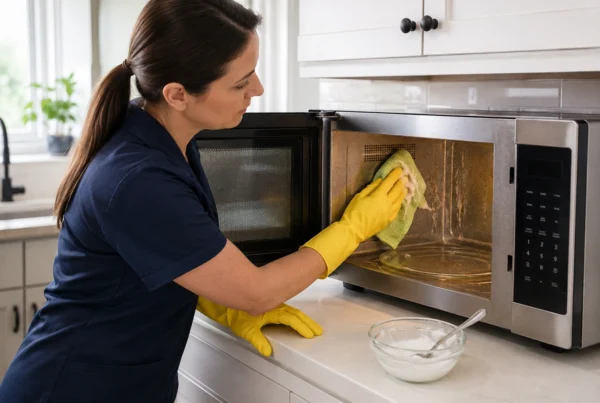
For a simple DIY approach, a paste made with baking soda and a small amount of water can be spread over stubborn areas of the glass. Leave it for several minutes so it has time to soften the residue, then wipe it away gently with a damp microfiber cloth.
You may need to repeat the process on heavily soiled areas.
Patience is usually safer than pressure.
Can You Use Vinegar on Oven Glass?
Vinegar can be useful for cleaning glass and dealing with light grease or residue.
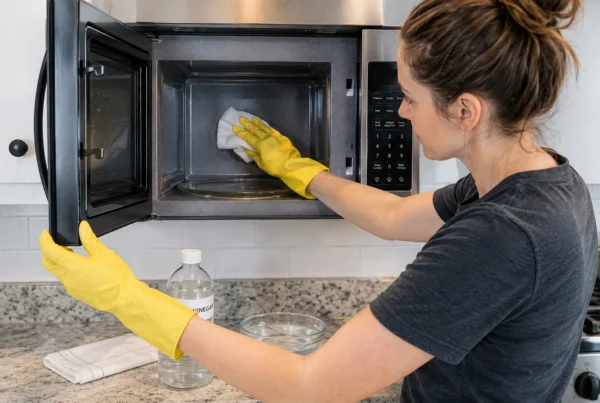
A simple mixture of equal parts white vinegar and warm water can be applied lightly to the glass and wiped with a microfiber cloth.
ProClean’s guide to making kitchen cleaner with vinegar also recommends a vinegar-and-water mixture for glass surfaces, including oven glass.
For heavier grease, vinegar may work better as part of the finishing process after the thicker buildup has already been loosened.
Avoid soaking seals or allowing large amounts of cleaner to run into openings around the oven door. You want to clean the glass surface, not flood the components surrounding it.
Can You Combine Baking Soda and Vinegar?
You can use both during the cleaning process, but you do not necessarily need to mix them together at the same time.
A baking soda paste can help loosen stubborn baked-on residue. Once that has been wiped away, diluted vinegar can be used to clean remaining residue and help leave the glass looking clearer.
The familiar bubbling reaction that happens when baking soda and vinegar meet looks impressive, but most of the cleaning benefit comes from using the products appropriately rather than relying on the fizz itself.
For many oven doors, allowing the baking soda paste to sit before wiping it away is more useful than immediately pouring vinegar over it.
What Should You Avoid When Cleaning Oven Glass?
Cleaning oven glass is one of those jobs where the wrong tool can create a bigger problem than the original stain.
Abrasive Scrubbing Pads
Avoid steel wool, harsh scouring pads, and other abrasive materials unless your oven manufacturer specifically states that they are safe for that surface.
These can leave scratches that cannot simply be cleaned away afterward.
Excessive Force
If a stain does not come off immediately, applying more pressure is not always the answer.
Add more cleaning solution, give it additional time, and try again.
Random Household Chemicals
Do not assume that every strong cleaner is suitable for an oven door.
Products designed for other surfaces may damage finishes or leave residues you do not want around an appliance used for cooking.
Always follow the instructions for the cleaner and your oven manufacturer.
Metal Tools
Be very cautious with razor blades, knives, metal spatulas, or other scraping tools. While certain glass surfaces may allow specialized scrapers when used correctly, using a random metal edge can scratch the glass or surrounding finish.
If you are unsure whether your oven glass can safely be scraped, stick with a non-abrasive method.
How Do You Clean Between the Oven Door Glass?
One of the most annoying situations is when the visible dirt appears to be trapped between two panes of glass.
Modern oven doors often contain multiple layers. Depending on the appliance, accessing the inside surfaces may require removing parts of the door.
This is where you should be careful.
Do not start unscrewing the oven door based on a generic cleaning tutorial. Different appliances have different designs, hinges, fasteners, and safety considerations.
Check the manufacturer’s instructions for your specific model before attempting to access the inside of the door.
If the door needs to be partially disassembled and you are uncomfortable doing so, professional cleaning or appliance service may be the better option.
How Often Should You Clean Oven Glass?
You do not need to deep clean the oven door after every meal.
However, wiping fresh splatters before they become repeatedly baked onto the surface can make future cleaning much easier.
If you notice grease or food residue on the glass, deal with it once the oven has cooled rather than allowing it to go through another several heating cycles.
A more thorough oven cleaning can then be done whenever visible buildup begins affecting the appearance of the door or when you are already deep cleaning the kitchen.
How often this is necessary depends heavily on how frequently you use the oven and what you cook.
How Can You Keep Oven Glass Cleaner for Longer?
The easiest oven glass to clean is the one that never develops a thick layer of baked-on residue.
You do not need to keep the appliance spotless every day, but a few habits can reduce buildup.
Wipe spills once the oven has cooled rather than leaving them for weeks. Use appropriately sized baking dishes to reduce overflowing food, and cover dishes when the recipe allows it to limit splattering.
Also pay attention to the rest of the oven interior. Grease and food residue elsewhere in the appliance can smoke during cooking and contribute to grime on the door.
Regular light cleaning usually takes much less effort than waiting until the glass becomes heavily coated.
What If the Oven Glass Still Looks Cloudy?
Sometimes the first cleaning removes the obvious grime but leaves behind streaks or a cloudy film.
Start by wiping the surface again with clean water to remove any remaining cleaning product.
Then use a clean microfiber cloth to dry and polish the glass.
If streaks remain, a diluted vinegar solution can help remove light residue.
Make sure you are using a genuinely clean cloth. Reusing a greasy kitchen cloth can simply move residue around the glass and leave you wondering why it still looks dirty.
If the cloudiness appears to be inside the glass rather than on either accessible surface, you may be dealing with buildup between the panes.
Should You Use a Commercial Oven Cleaner?
Commercial oven cleaners can be useful for heavy buildup, but you should check the product instructions and your appliance manufacturer’s recommendations before applying one to the door glass.
Not every product is intended for every oven surface.
If you use a commercial cleaner, follow its directions carefully, ventilate the area as instructed, and avoid mixing it with other cleaning chemicals.
More product does not automatically mean a better result.
For moderate buildup, gentler methods may be enough and give you greater control over what touches the glass and surrounding materials.
When Is It Worth Calling Professional Cleaners?
Sometimes oven cleaning simply takes more time than you want to spend on it.
Baked-on grease can require repeated applications, and cleaning the rest of the kitchen at the same time can turn a small weekend task into several hours of work.
Professional cleaning can make sense if the oven is heavily soiled, you are preparing for a move, you want a deeper kitchen clean, or you simply prefer having someone else handle the job.
ProClean offers special cleaning requests that include deep appliance cleaning such as the inside of ovens, refrigerators, and microwaves.
Our broader house cleaning services can also include kitchen cleaning alongside the rest of the home, allowing you to take care of more than one problem area during the same visit.
How to Clean Oven Glass Without Scratching It
Learning how to clean oven glass safely is less about finding the strongest possible cleaner and more about using the right technique.
Start with a completely cool oven and remove loose debris. Try warm water and dish soap for light grease, then move to a baking soda paste or suitable cleaner for more stubborn buildup. Give the product time to loosen the grime before wiping with a soft cloth or non-abrasive sponge.
Avoid steel wool, aggressive scouring pads, and unnecessary scraping. If something refuses to come off, repeat the cleaning process rather than immediately reaching for a harsher tool.
And once the glass is clean, wipe fresh spills when the oven cools so they do not have the chance to become tomorrow’s baked-on mess.
If your oven, or the rest of your kitchen, needs more attention than you have time to give it, contact ProClean to request a quote and find a cleaning service that fits your home.
Follow us on our socials here:
Find out more articles that can help you below: