

Busy weekdays in Vancouver often leave little time for keeping your home truly clean. Many homeowners discover that despite regular tidying, hidden germs and allergens linger longer than expected. Understanding the difference between simple surface cleaning and true hygiene can make a real difference for your family’s well-being. By embracing proven, science-backed methods and building a steady routine, you create a living space that is not only tidy but also genuinely healthy. Consistent, informed cleaning is the foundation for a safer, more comfortable home.
Table of Contents
- Defining Regular House Cleaning And Misconceptions
- Essential Cleaning Types And Key Tasks Explained
- How Routine Cleaning Supports Health And Comfort
- Risks Of Neglect And Long-Term Implications
- Hiring Professionals Vs. DIY: Comparing Outcomes
Key Takeaways
| Point | Details |
|---|---|
| Regular Cleaning is Preventative Maintenance | It focuses on routine tasks to maintain hygiene and order without aiming for perfection. |
| Understand Cleaning Myths | Believing common misconceptions can lead to ineffective cleaning and potential damage to surfaces. |
| Different Types of Cleaning | Regular, deep, and specialised cleaning serve distinct purposes and should be integrated into a routine for optimal home maintenance. |
| Benefits of Professional Cleaning | Hiring professionals saves time and ensures quality, while DIY cleaning offers cost savings and control over the process. |
Defining Regular House Cleaning and Misconceptions
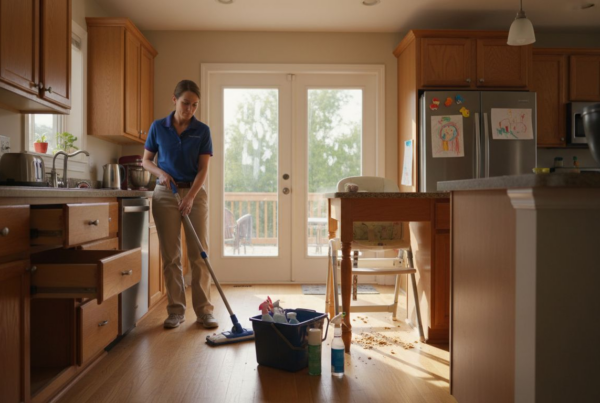
Regular house cleaning means maintaining your home through consistent, routine cleaning tasks performed weekly or bi-weekly. It’s not deep cleaning; it focuses on everyday surfaces, floors, and common areas to keep your space hygienic and organised.
Many Vancouver homeowners confuse regular cleaning with spotless perfection. Regular cleaning aims for a clean, healthy environment—not a showroom-ready home. The goal is preventing dirt buildup and reducing allergens, dust, and bacteria that accumulate naturally over time.
What Regular House Cleaning Actually Includes
Proper regular cleaning involves specific, consistent tasks rather than random scrubbing. Think of it as preventative maintenance for your home’s cleanliness and health.
Core tasks in regular house cleaning include:
- Vacuuming carpets and rugs (weekly)
- Sweeping and mopping hard floors
- Dusting surfaces, shelves, and furniture
- Cleaning bathrooms (toilets, sinks, showers)
- Wiping down kitchen counters and appliances
- Changing bed sheets
- Taking out rubbish and recycling
Each task targets specific areas where dirt, germs, and allergens accumulate. What’s included in standard cleaning varies slightly based on your needs, but these fundamentals form the foundation of home health.
Common Misconceptions About Cleaning
Many myths about house cleaning lead homeowners astray. Understanding the truth helps you maintain your home more effectively.
Myth 1: More soap equals cleaner surfaces. This is false. Excessive soap leaves residue that actually attracts dirt and grime. Using the right amount of quality cleaner works better than doubling up.
Myth 2: Bleach works on everything. Bleach is powerful but damages many surfaces—granite, wood, and coloured fabrics included. It’s a spot tool, not an all-purpose disinfectant.
Myth 3: Hot water cleans everything best. Temperature matters less than you think. Cold water handles many stains better, especially protein-based ones like blood or egg.
Myth 4: A clean-looking home is a clean home. Appearance and actual cleanliness differ significantly. A room can look tidy while harbouring germs and allergens. Visual cleanliness and true hygiene require different approaches.
Myth 5: Fancy tools clean better. Microfibre cloths outperform traditional feather dusters. The right tool beats expensive gadgets every time.
Why These Misconceptions Matter for Your Home
Believing cleaning myths wastes your time and money. Using incorrect methods can damage surfaces, leave your home less hygienic, and create unnecessary frustration.
Proper cleaning knowledge ensures your efforts actually protect your family’s health. Understanding product instructions, contact time, and appropriate tools makes the difference between wasting effort and achieving real results.
Regular cleaning isn’t about perfection—it’s about consistent, science-based methods that keep your Vancouver home healthy and welcoming.
Pro tip: Read product labels carefully and follow manufacturer instructions for dilution ratios and contact time; this ensures you’re actually killing germs, not just moving dirt around.
Essential Cleaning Types and Key Tasks Explained
Cleaning breaks down into distinct types, each serving a different purpose in maintaining your Vancouver home. Understanding these categories helps you tackle tasks efficiently and stay on schedule.
Regular cleaning, deep cleaning, and specialised cleaning form the core trio. Each type addresses different needs and frequencies. Regular cleaning prevents buildup; deep cleaning removes stubborn dirt; specialised cleaning handles specific areas like windows or gutters.
Types of Regular Cleaning Tasks
Regular cleaning focuses on high-traffic areas and surfaces you use daily. These tasks prevent dirt accumulation and maintain basic hygiene throughout your home.
Key regular cleaning tasks include:
- Kitchen cleaning: Counters, appliances, sinks, stovetops
- Bathroom cleaning: Toilets, sinks, showers, mirrors
- Floor care: Vacuuming, sweeping, mopping
- Dusting: Furniture, shelves, surfaces
- Bedroom tasks: Changing sheets, tidying surfaces
- Living areas: Wiping down, organising clutter
These tasks typically happen weekly or bi-weekly. Establishing a cleaning schedule ensures consistent maintenance across your entire home.
Deep Cleaning vs. Regular Cleaning
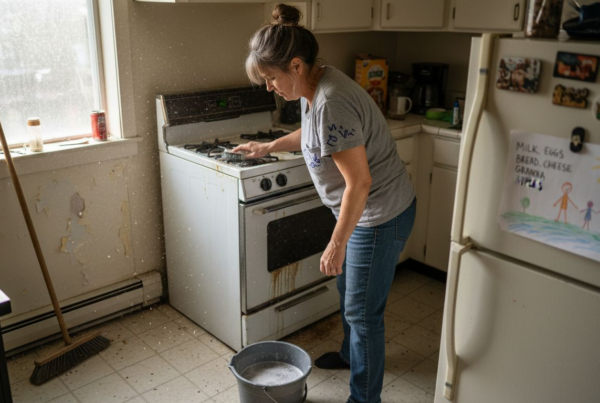
Deep cleaning targets areas regular cleaning misses. It goes behind appliances, under furniture, and into corners where dust accumulates over months.
Deep cleaning tasks include:
- Inside refrigerators and ovens
- Behind and under appliances
- Baseboards and windowsills
- Carpet and upholstery spots
- Grout lines and tile crevices
- Light fixtures and vents
Deep cleaning happens quarterly or seasonally, not weekly. It’s more intensive and time-consuming than regular maintenance.
Specialised Cleaning Services
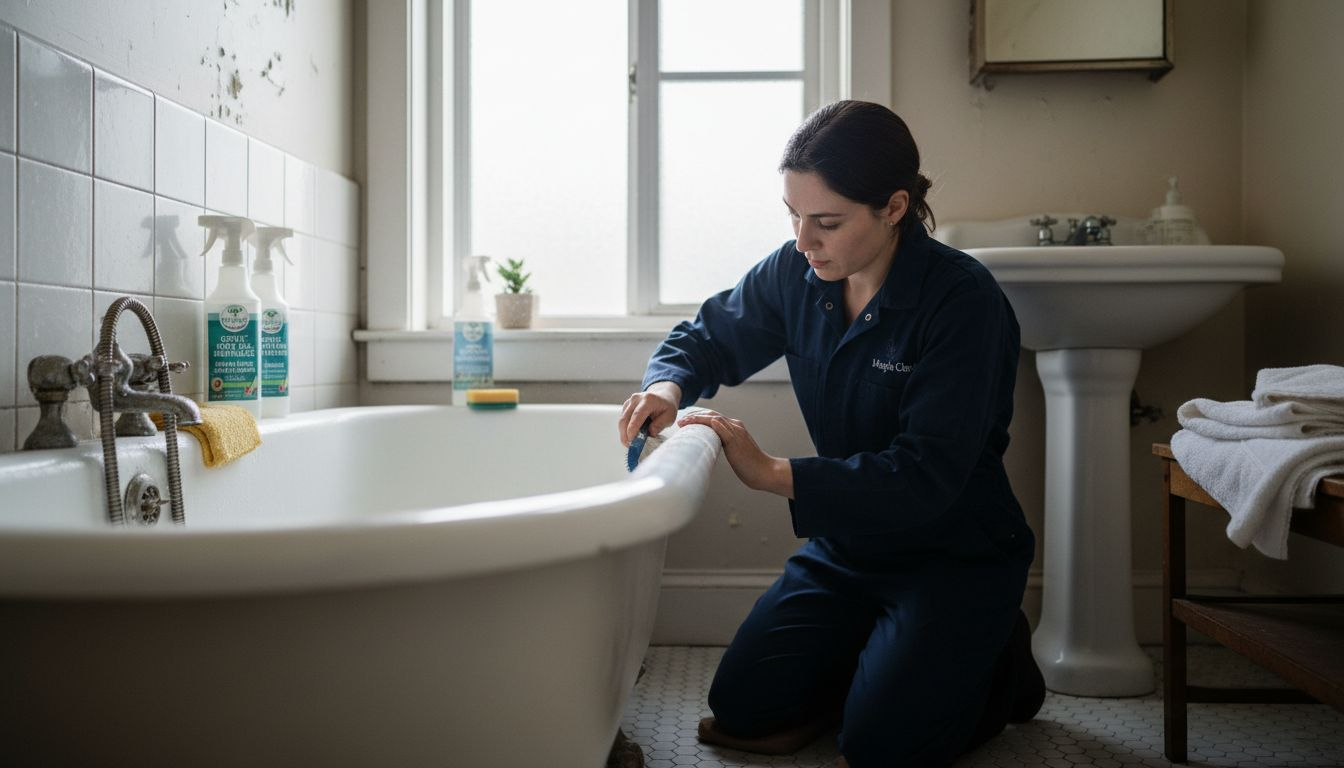
Some cleaning needs fall outside regular and deep categories. These specialised services address specific challenges Vancouver homes face.
Specialised cleaning includes:
- Window and exterior cleaning (weather exposure)
- Pressure washing (decks, patios, driveways)
- Roof and gutter cleaning (rainwater management)
- Carpet and upholstery cleaning (deep stain removal)
- Post-construction cleaning (debris removal)
These services require professional equipment and expertise. Many Vancouver homeowners schedule them annually or as needed.
Here’s how regular, deep, and specialised cleaning compare for Vancouver homes:
| Cleaning Type | Main Focus | Typical Frequency | Example Areas Serviced |
|---|---|---|---|
| Regular Cleaning | High-traffic surfaces | Weekly or bi-weekly | Kitchens, bathrooms, bedrooms |
| Deep Cleaning | Hidden dirt and stains | Quarterly or seasonally | Behind appliances, grout lines |
| Specialised Cleaning | Unique challenges | Annually or as needed | Windows, gutters, patios |
Different cleaning types serve different purposes—regular keeps your home liveable, deep cleans what regular misses, and specialised tackles tough Vancouver-specific challenges.
Creating Your Cleaning Routine
Combining these cleaning types into one routine keeps your home consistently clean. Start with regular tasks weekly, add deep cleaning quarterly, and book specialised services as needed.
Your routine should match your home’s size, family needs, and lifestyle. Busy families benefit from professional support to handle deep and specialised tasks while managing regular cleaning themselves.
Pro tip: Create a weekly checklist for regular tasks (Monday: bathrooms, Wednesday: floors, Friday: dusting) and block quarterly dates for deep cleaning to prevent overwhelm and ensure nothing gets forgotten.
How Routine Cleaning Supports Health and Comfort
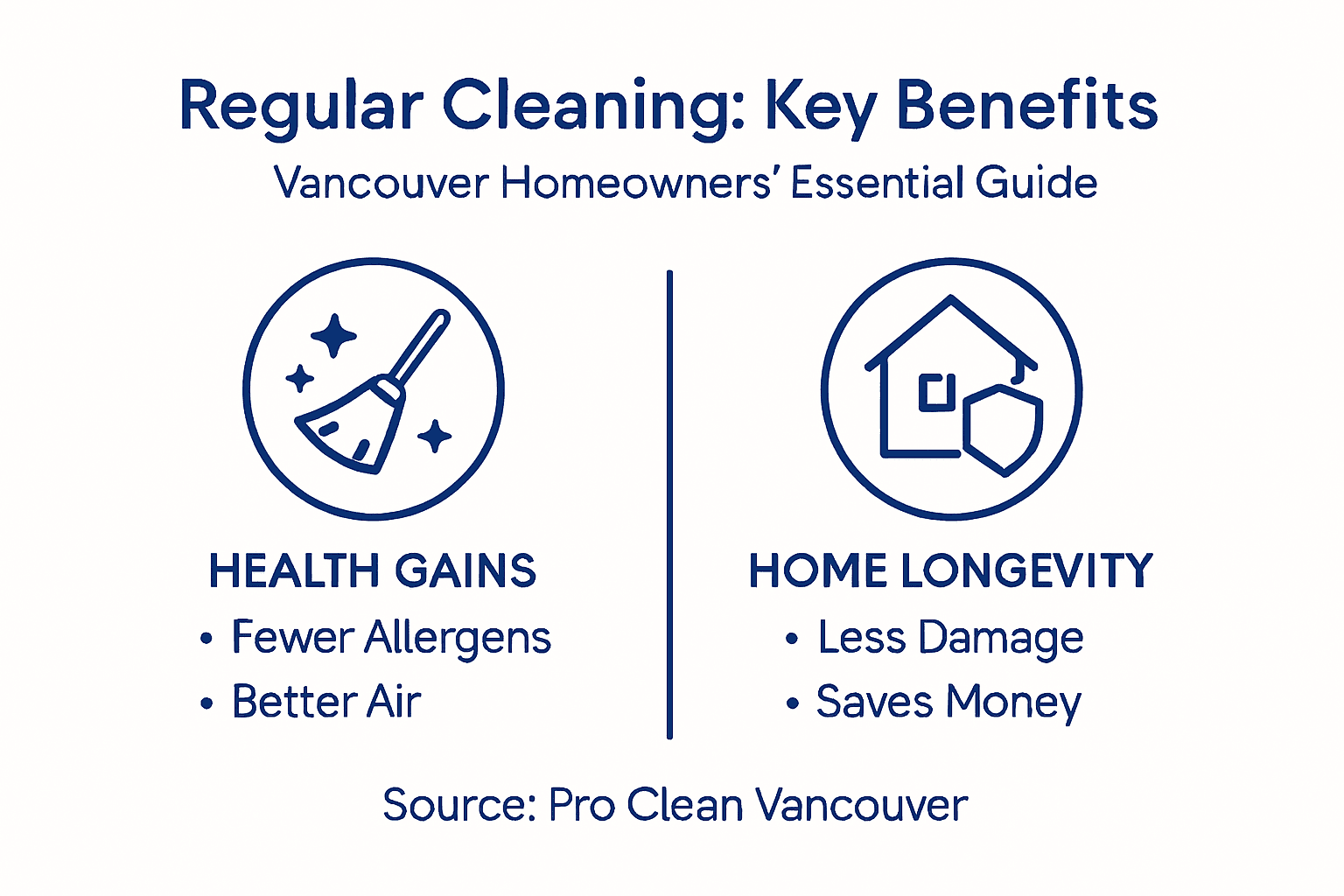
Routine cleaning does more than make your home look nice. It directly impacts your family’s health, mental well-being, and daily comfort. A clean home is a healthier home.
Dust, allergens, bacteria, and viruses accumulate silently on surfaces. Regular cleaning removes these invisible threats before they cause illness. The connection between cleanliness and health is scientifically proven and affects everyone in your household.
Physical Health Benefits
Clean homes reduce disease transmission and respiratory problems. Dust and allergens settle on every surface, causing allergies, asthma flare-ups, and other respiratory issues for Vancouver residents.
Key health benefits include:
- Reduced allergens: Regular cleaning lowers dust mite populations
- Lower illness rates: Removing pathogens prevents colds and flu
- Better air quality: Dusting and vacuuming eliminate airborne particles
- Fewer infections: Clean bathrooms and kitchens prevent bacterial growth
- Skin health: Regular surface cleaning reduces acne-causing bacteria
Routine cleaning improves indoor air quality by reducing allergens and pathogens that settle in carpets, furniture, and air vents. This is especially important for children, elderly family members, and anyone with respiratory conditions.
Mental Health and Emotional Well-Being
Clean, organised spaces calm your mind and reduce stress. Visual clutter and grime create mental overwhelm, even unconsciously.
When your home is clean, you experience:
- Lower stress and anxiety levels
- Improved focus and concentration
- Greater sense of control over your environment
- Reduced feelings of overwhelm
- Enhanced mood and emotional stability
Your brain processes visual information constantly. A cluttered, dirty space demands mental energy just to ignore it. A clean home frees your mind to focus on what matters.
Creating Comfort and Stability
Consistent cleaning creates predictability in your living space. You know where things are, surfaces are pleasant to touch, and your home feels welcoming.
This stability matters because:
- Clean homes feel safer and more secure
- Family members feel cared for when spaces are maintained
- Guests feel welcome in your space
- Daily routines become easier without clutter obstacles
- Your home becomes a genuine refuge from stressful work and school days
A clean home prevents illness, clears your mind, and creates the emotional sanctuary every family needs to thrive.
Long-Term Benefits
Regular cleaning extends the life of your furniture, flooring, and appliances. Dirt and grime cause premature wear and damage that costly replacements could have prevented.
Consistent maintenance saves money by protecting your investment in your home. It also builds healthy habits that compound over time.
Pro tip: Establish a weekly 30-minute cleaning ritual with your family—it takes less time than you think, builds shared responsibility, and creates a healthier living environment for everyone.
Risks of Neglect and Long-Term Implications
Neglecting regular house cleaning creates serious health and financial consequences. What starts as “I’ll clean it later” becomes a compounding problem that affects your family’s wellbeing and your home’s structural integrity.
The risks multiply over time. A home left uncleaned deteriorates rapidly, inviting pests, mould, and damage that costs thousands to repair.
Health Risks from Accumulated Dirt
Uncleaned homes become breeding grounds for bacteria, viruses, and allergens. These accumulate silently until someone gets sick.
Specific health risks include:
- Respiratory infections from dust and mould spores
- Allergies and asthma exacerbation
- Skin infections and fungal conditions
- Gastrointestinal illnesses from kitchen and bathroom bacteria
- Weakened immune system from constant pathogen exposure
- Pest-borne diseases from rodents and insects
Poor hygiene and unsafe living conditions contribute to rapid health decline, particularly for vulnerable family members like children and elderly relatives. These health problems compound quickly and become expensive to treat.
Structural and Property Damage
Dirt, grime, and moisture create conditions that damage your home permanently. Mould grows in damp spaces, weakening walls and foundations. Pest infestations cause structural damage that spreads.
Common damage from neglect includes:
- Mould growth in walls and under carpets
- Pest infestations damaging insulation and wood
- Stained and stained flooring requiring replacement
- Deteriorating grout and tile caulking
- Fixture corrosion in bathrooms and kitchens
- Window frame rot from accumulated moisture
Repairs for these issues cost thousands of dollars. Prevention through regular cleaning costs far less.
Financial Consequences
Neglected homes lose value and attract costly repairs. Property damage repair bills exceed what regular professional cleaning costs by hundreds of dollars.
You face:
- Major renovation expenses (mould remediation, structural repair)
- Lower property resale value
- Difficulty securing insurance or higher premiums
- Emergency repair costs that exceed budgets
- Pest control treatments for infestations
Neglecting cleaning today creates expensive, stressful problems tomorrow. Prevention is always cheaper than restoration.
Emotional and Social Impact
Living in an uncleaned home affects mental health and relationships. Embarrassment about your living space isolates you from friends and family. Stress from clutter and chaos compounds daily.
Family members suffer emotional consequences from:
- Shame about inviting guests over
- Anxiety and depression from environmental stress
- Reduced quality time because the space feels uninviting
- Strained relationships from disagreements about cleanliness
- Loss of pride in your home
Pro tip: Start small with a 15-minute daily tidy-up of high-traffic areas; this prevents the overwhelming accumulation that leads to neglect and keeps your home, health, and finances protected.
Hiring Professionals vs. DIY: Comparing Outcomes
The decision between hiring professionals and cleaning yourself depends on your time, budget, and priorities. Both approaches work—but they deliver different results and come with distinct trade-offs.
Understanding the differences helps you make the right choice for your Vancouver home and family situation.
Professional Cleaning: Benefits and Drawbacks
Professional cleaners bring expertise, speed, and consistency. They finish in hours what takes you days.
Key advantages of hiring professionals:
- Time savings: Free up 10-15 hours monthly for family and work
- High-quality results: Trained techniques and professional-grade equipment
- Consistent maintenance: Regular schedules prevent buildup
- Expertise for tough jobs: Handle deep cleaning, windows, and specialised tasks
- Stress relief: No overwhelm from cleaning responsibilities
- Professional equipment: Access to tools you don’t own
The main drawbacks are cost and loss of personal control. Professional cleaning services provide expertise and consistent quality but require financial investment and trusting someone in your home.
For Vancouver families juggling work, kids, and commitments, professionals often justify the cost through time recovered.
DIY Cleaning: Flexibility and Cost Control
Doing it yourself costs less and lets you control every detail. You choose products, timing, and standards.
Key advantages of DIY cleaning:
- Lower cost: No service fees, just supply expenses
- Complete control: You decide what gets cleaned and how
- Flexibility: Clean on your schedule, not a service provider’s
- Personal satisfaction: Pride in maintaining your own space
- Immediate response: Address spills and messes instantly
The catch is time and physical demand. DIY cleaning requires significant effort, and you might miss spots that professionals catch.
Below is a quick guide to help you decide between professional and DIY cleaning approaches:
| Factor | Professional Cleaning | DIY Cleaning |
|---|---|---|
| Time Required | Minimal for homeowner | 5–15 hours monthly |
| Cost Impact | Ongoing service fees | Cleaning supplies only |
| Quality Control | Consistent, expert results | Fully in your own hands |
| Flexibility | Fixed appointment schedule | Clean whenever you choose |
| Suited For | Busy or large households | Budget-conscious families |
Comparing Outcomes: Quality and Longevity
Professional cleaners achieve deeper results faster because they know techniques you may not. They reach behind appliances, clean grout properly, and eliminate allergens more thoroughly.
DIY cleaning works well for regular maintenance but struggles with stubborn stains and deep accumulation. DIY approaches are cost-effective but can be time-consuming and physically demanding compared to professional efficiency.
Most Vancouver homeowners find a hybrid approach works best: hire professionals quarterly for deep cleaning and handle regular weekly tasks themselves. This balances cost, quality, and time.
The best cleaning strategy matches your budget, time availability, and cleaning complexity—professionals excel at deep work while DIY handles consistent maintenance.
Making Your Decision
Consider your situation honestly. Busy families with young children, elderly relatives, or limited time benefit most from professional help. If budget is tight and you have time, DIY makes sense.
Factors to weigh:
- Monthly time available for cleaning
- Current physical ability to clean
- Budget for professional services
- Complexity of your home (size, layout)
- Your health and energy levels
Pro tip: Start with professional deep cleaning once, then handle weekly maintenance yourself; this gives you baseline cleanliness while saving money on routine tasks you can manage.
Keep Your Vancouver Home Healthy with Expert Regular Cleaning
Maintaining a clean and healthy home in Vancouver requires more than just occasional tidying. Regular house cleaning prevents dirt buildup, reduces allergens, and safeguards your family’s health as discussed in the article. But consistent cleaning can be time-consuming and challenging amidst your busy lifestyle. That is why trusting professional services like Residential Cleaning – Pro Clean makes all the difference in keeping your living space hygienic and welcoming.

Experience the benefits of routine cleaning without the stress by booking with House Cleaning – Pro Clean today. Our trusted, fully insured Vancouver cleaning professionals offer flexible scheduling seven days a week and competitive rates tailored to your needs. Protect your home from costly damage and health risks now. Visit GetProClean to request a fast online estimate and create a cleaning routine that fits your family’s lifestyle.
Frequently Asked Questions
What is the difference between regular cleaning and deep cleaning?
Regular cleaning focuses on maintaining everyday surfaces and preventing buildup through consistent tasks, while deep cleaning targets hidden dirt and is more intensive, addressing areas missed during regular cleaning.
How often should I perform regular house cleaning tasks?
Regular cleaning tasks should be performed weekly or bi-weekly to maintain a hygienic and organized living environment, focusing on high-traffic areas and surfaces used daily.
What are some essential tasks included in regular house cleaning?
Core tasks in regular house cleaning include vacuuming carpets, dusting surfaces, cleaning bathrooms, wiping down kitchen counters, and taking out rubbish and recycling.
Why is routine cleaning important for health?
Routine cleaning helps remove dust, allergens, bacteria, and viruses from surfaces, reducing the risk of respiratory issues and illnesses, and promoting overall health and well-being.